Start Before January
Not in January. Not when things “calm down.” Right now.
You’re exhausted, overwhelmed, and telling yourself you just need to survive December. Every year you promise, “I’ll reset in January.” Wellness culture even co-signs it. But what if that mindset is the very reason burnout keeps circling back?
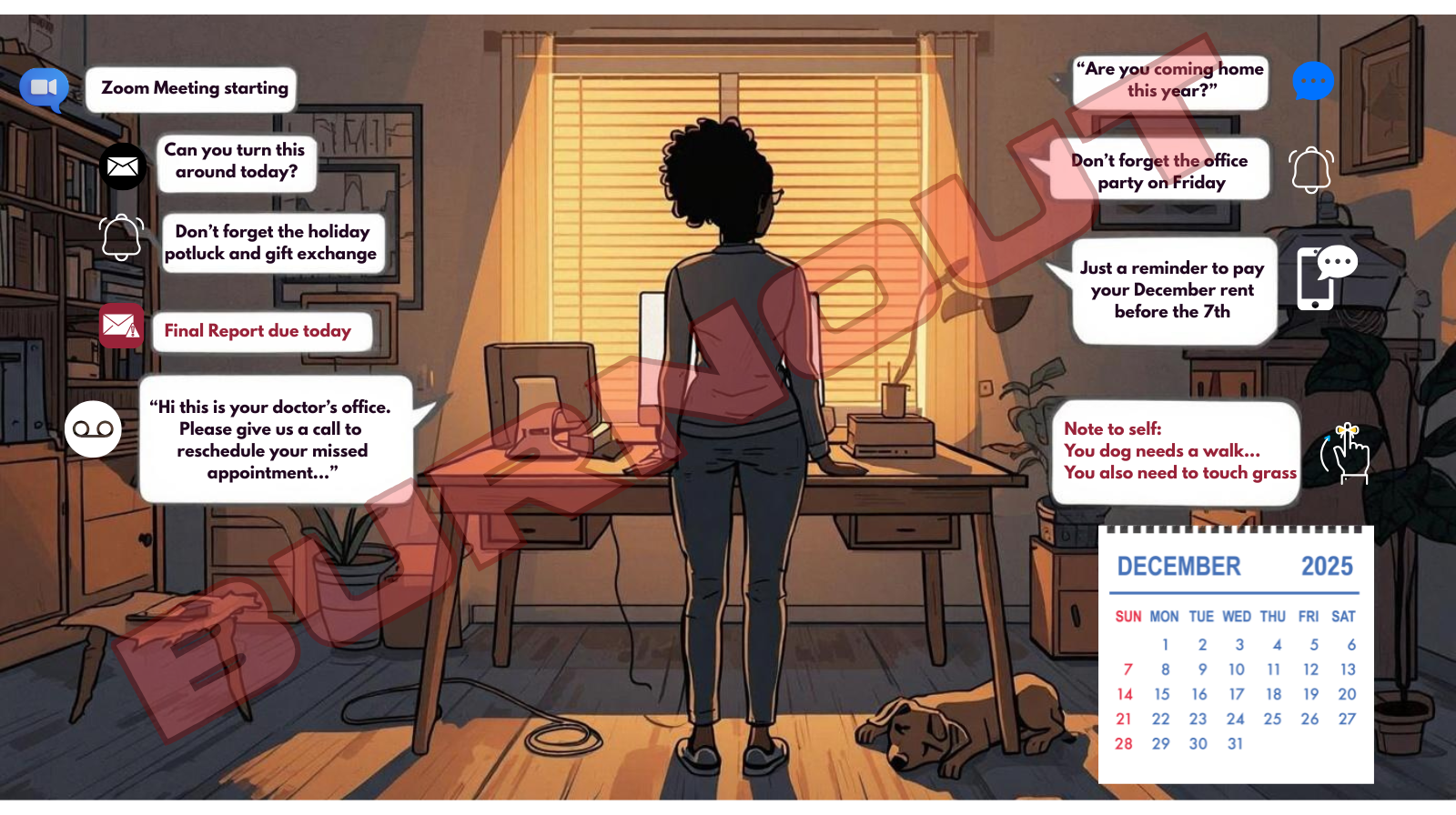
December is Your Burnout Walk-Up Call
It feels logical to wait. Your energy is low, the calendar is full, and the idea of fixing burnout on top of everything else seems unrealistic. But that same reasoning — that promise of a “better time coming soon” — is the invisible thread that keeps the burnout cycle stitched together.
Here’s the truth:
December isn't the obstacle to burnout recovery — it’s the training ground.
This month shows you, clearly and honestly, how you react under pressure. And that makes it the single most powerful moment to begin changing those patterns.
The Fatal Flaw in “I’ll Start in January” Thinking
January feels like a clean slate, but for burnout recovery, it’s one of the worst times to start. Because when you wait for calm to practice new coping patterns, you’re learning to “swim in a quiet pool” and expecting those skills to hold when stress surges again. But burnout doesn’t happen in calm conditions. It happens:
when demands increase
when boundaries blur
when you default to old survival habits
when you’re depleted and still pushing
January removes the stress cues that cause burnout — which means you’re practicing in an environment completely disconnected from the one that needs to change.
Real burnout recovery must happen inside the conditions that create burnout, not outside of them.
Why Your Brain Learns Better During Stress
There’s a neurological reason December is such a powerful month to change your burnout patterns. Your brain forms the strongest pathways when you practice new behaviors:
under the same conditions where you’ll need them
with the same stress signals present
during the same emotional states
This is why firefighters train in simulated emergencies, not classrooms — and why musicians practice difficult passages when they’re uncomfortable, not just when they feel confident. So when you’re stressed, overwhelmed, and tempted to fall back into old habits?
That’s the moment your brain is most primed to learn something new.
One small boundary you set in December is worth five you set in January. Because it teaches your nervous system:
“I can make a different choice even when I’m under pressure.”
That lesson only sticks when it’s practiced in real time.
Starting Now Creates a Compound Effect January Can’t Match
Every day you wait to address burnout reinforces the burnout cycle:
pushing past your limits
overriding your needs
numbing through productivity
relying on future-you to “figure it out”
Your brain treats repetition like instruction. So if December is full of “I’ll deal with this later,” guess what you’re training your mind to expect in January?But when you start now — with micro-shifts, not massive overhauls — everything accelerates.
Imagine these two paths:
Path A: Waiting Until January
You push through December.
You collapse into January recovery mode.
You gain relief but no new skills.
February brings stress, and the cycle repeats.
Path B: Starting Tiny Changes in December
You practice 3–4 small boundaries under real pressure.
You learn what actually works for your nervous system.
You enter January with new habits already tested.
You begin the year with momentum instead of desperation.
Tiny December shifts = a massive January payoff.
December’s Constraints Are Actually an Advantage
The very things that make December feel “too stressful” for burnout work are exactly what make it ideal:
1. The timeline forces clarity.
You don’t have space for a 12-step plan.
You do have space to choose one thing that matters.
2. Your exhaustion is honest.
When you’re depleted, you can see clearly what isn’t working.
No illusions. No denial. Just truth.
3. The stakes are real.
Any boundary or shift you make in December is tested immediately.
This gives you instant feedback about what’s sustainable.
4. Perfectionism loses its grip.
High demand forces simplicity.
Simple = sustainable.
Sustainable = burnout-proof.
December isn’t a barrier — it’s a built-in accountability system.
What Starting Now Actually Looks Like
This isn’t about doing more. t’s about responding differently to what’s already happening. Try one of these tiny, high-impact shifts:
1. Decline or simplify one commitment you’re dreading.
Not all of them. Just one.
2. Protect 10–15 minutes of real rest daily.
No phone. No productivity. Just your nervous system catching its breath.
3. Choose “adequate” instead of “perfect” for one holiday task.
Good enough is healing. Excellent is often a trigger.
4. Pause before you say yes.
Even a three-second pause disrupts automatic over-giving.
5. Acknowledge your limits out loud.
Not as weakness — as wisdom. These aren’t resolutions. They’re rehearsals for a healthier January.
The Truth About “Perfect Timing”
The perfect time to address burnout is always right before you break — not after. And if you’re reading this in December, you’re likely already at (or past) that threshold. Waiting until January reinforces the same mindset that caused burnout in the first place:
“I’ll take care of myself later.”
Later rarely comes. And when it does, life already has another wave waiting. The most powerful burnout recovery doesn’t happen when everything is calm… It happens the moment you choose differently while life is still demanding.
Start Before You’re Ready
December won’t magically clear your schedule or refill your energy tank. But you can start shifting:
your responses
your boundaries
your internal dialogue
your expectations of yourself
Right Now, even inside the chaos. Because when January arrives? You won’t be starting from zero.
You’ll be starting with proof — evidence that you can protect yourself even when conditions aren’t perfect.
And that changes everything.
Ask yourself…
“What is one small choice I can make today — not in January — that honors my real limits instead of my imagined capacity?”
Start there. Start now. Your burnout recovery begins in the middle of the storm.
Dr. Kat